
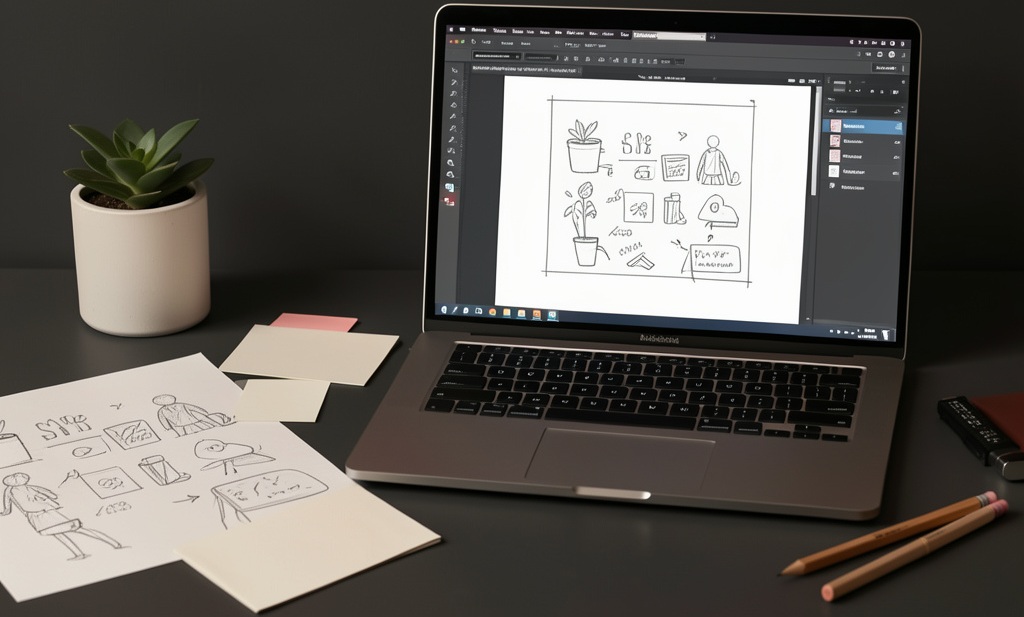
A digital product can be a checklist, template, guide, workbook, or short lesson. You do not need to create a large library of materials before you begin. A more manageable approach is to solve one specific problem with a small, useful first version.
Start with a real problem
Write down the problem your product should help with. Be specific: “organize weekly meals” is clearer than “be more productive.” Think about who experiences the problem, what they currently do, and what result would make the task easier.
If you are unsure whether the problem matters to other people, talk to a few potential users or ask for feedback on the idea before building the full product.
Choose a simple format
Choose a format that suits the task. A checklist can help someone complete a short process. A template can provide a reusable starting point. A guide can explain a sequence of steps, while a short lesson may work better when the task is easier to demonstrate than to describe.
Start with the smallest format that can genuinely help. Avoid adding extra sections just to make the product look bigger.
Define the first version
Write down what the product will include and what it will leave out. For example, a first version might have a short introduction, a few practical steps, and a worksheet. This gives you a clear boundary and makes the project easier to finish.
Create a simple outline before writing or designing. Put the steps in the order a user will need them. Use plain language, explain unfamiliar terms, and include an example where it makes an instruction clearer.
Make it usable
Check that someone can use the product without needing you to explain every page. Give files clear names, include brief instructions, and make the layout readable on a phone or computer. If you include links or external materials, check that you have permission to use them and that the links work.
Keep an editable master copy and export a ready-to-use version. That way, you can make improvements without rebuilding the product.
Get feedback and revise
Share a draft with a small number of people who resemble the intended users. Ask concrete questions: What was clear? Where did you get stuck? What did you expect to find but could not? Look for repeated feedback rather than changing everything after one comment.
Before offering the product to a wider audience, make sure its description matches what it actually provides. Avoid promises that the product cannot guarantee, and be clear about what buyers or users will receive.
Make the next version better
After people try the product, note which parts helped and which instructions caused confusion. Improve those sections first. A simple, focused product that solves its stated problem is a better foundation than a large product filled with features no one asked for.
Quick checklist
- The product addresses one specific problem.
- The format suits the task.
- The first version has a clear, limited scope.
- Instructions and files are easy to use.
- Feedback has been collected and reviewed.
- The product description matches what it delivers.